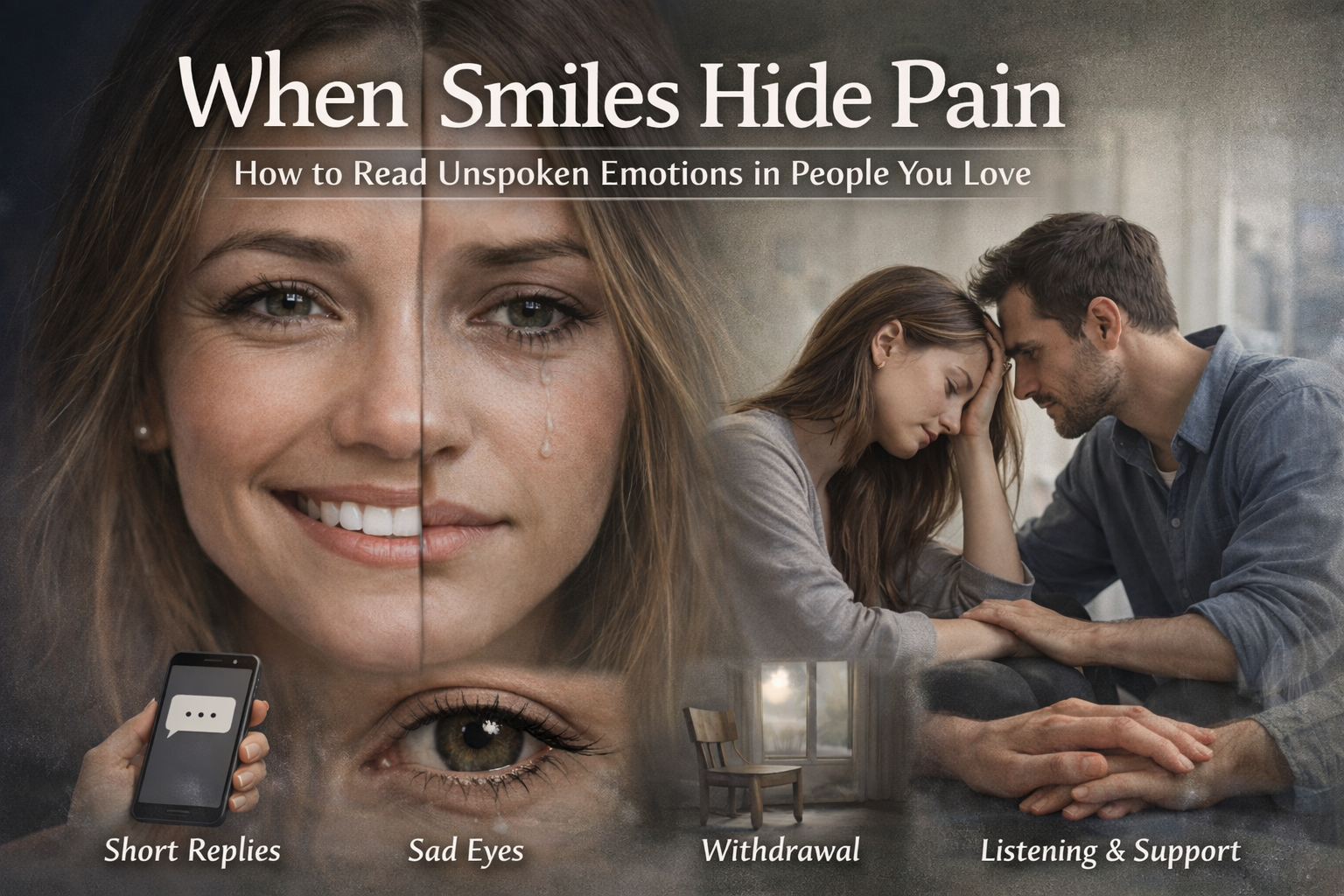

Hidden emotions can be hard to detect in people you care about. Often, the people who smile the most are carrying the heaviest weight. Not everyone says what they feel, and some never ask for help. Many people suppress pain because they worry about being a burden or have never learned an emotional vocabulary to describe their feelings. In relationships, emotional restraint can even stem from values like loyalty or respect. For example, psychologists note that someone might downplay anger toward a loved one out of filial piety or fear that expressing it would feel disrespectful. Yet that very restraint—remaining quiet and “putting a wall” between us and others—is often a silent cry for understanding. Learning to recognize these unspoken cues helps us respond with empathy rather than leave our loved ones to suffer in silence.
Why People Hide Their Feelings
People hide their pain for many psychological and social reasons. Common factors include:
- Fear of Being a Burden: Some feel their problems aren’t important enough to share or worry they’ll overwhelm others. Phrases like “I don’t want to be a burden” often mask deep loneliness. Counselor Natalie Buchwald observes that this mindset usually comes from early experiences and leads people to constantly apologize for their emotions or suppress them. Over time, this self-perception of being a burden causes chronic emotional exhaustion as they carry weight alone.
- Lack of Emotional Language: Growing up in homes where feelings were never named or discussed leaves many without the words to express themselves. As one therapist notes, without language to describe an emotion it’s nearly impossible to fully own or process it. This “emotional illiteracy” inhibits intimacy and makes sharing pain feel overwhelming. Therapist Lisa Williams suggests that resources like Brené Brown’s Atlas of the Heart can help expand our emotional vocabulary and make it easier to articulate hidden feelings.
- Past Dismissal or Shame: If someone has opened up before only to be told they’re “overthinking” or “too sensitive,” they quickly learn to shut down. In fact, Seltzer notes that many women fear speaking up because they expect to be dismissed as “too sensitive,” while many men worry that crying or complaining will compromise their masculinity. These fears are reinforced if showing vulnerability ever resulted in judgment or ridicule, so hiding feelings becomes a learned self-protection.
Each of these patterns leads people to internalize pain. Over time it becomes more convenient to stay silent than to risk judgment or burden others.
Signs of Hidden Emotions Behind a Smile
Not everyone who keeps up a cheerful front is actually fine. There are subtle signs that someone may be carrying hidden pain:
- Unusual Quietness or Energy Shifts: They may attend gatherings and do their usual chores, but you notice changes. They laugh less freely, avoid eye contact, or seem mentally distant. Psychologist Seltzer points out that “one clue that a person is feeling distressed may be in their becoming unusually quiet or shut down.” Such silence often means they’re “putting a wall” up to protect themselves. Conversely, a hidden sign can be the opposite behavior: they might become suddenly fidgety, restless, or hyper-active, as if overdoing tasks to distract from their feelings. Even small routines change – maybe they lose their appetite or throw themselves into busywork. All of these shifts in energy can signal that their outward composure is masking turmoil.
- Consistent Deflection: Some people are great listeners to others but turn deflective when asked about themselves. You may notice they quickly change the topic or give one-word answers if you ask how they’re doing. Often they’ll ask about your life in detail, but when it comes to sharing, they clam up. This pattern of avoiding personal disclosure is a protective strategy. It quietly says, “I don’t want to talk about myself,” even though their nonverbal cues betray stress.
- Heightened Sensitivity: Pay attention if tiny triggers seem to set them off or they become unexpectedly withdrawn after an innocent comment. Seltzer notes that an upset person might react strongly to a minor annoyance as a way to stuff the real hurt. For example, they might snap at a casual remark or retreat abruptly into silence. This exaggerated reaction usually isn’t about the small issue at hand, but about unprocessed emotions coming to the surface.
- Contradictory Body Language: Watch for mismatches between words and body language. HelpGuide explains that when someone’s verbal message doesn’t match their nonverbal cues, listeners tend to trust the body language. For instance, a calm “I’m fine” spoken with a tense posture, lack of eye contact, or trembling voice suggests the opposite. These unconscious signals – crossed arms, forced smiles, or distracted posture – can reveal hidden emotions that words try to hide.
Each of these signs on its own doesn’t prove distress, but together they paint a picture. If you notice several of these behaviors, they likely signal unspoken struggle.
Common Mistakes When Trying to Help
When we sense someone is hurting, it’s natural to want to make it better. But certain well-intended responses can actually push them away:
- Minimizing Their Feelings: Saying things like “You seem fine to me,” “Everyone deals with this,” or “It’s not a big deal” can feel dismissive. Psychologists note that people often hide pain because they fear those exact reactions. For example, many women worry opening up will get them labeled “too sensitive,” so any hint of minimization confirms their fear. Even comments meant to reassure can come off as invalidating. Telling someone to “just think positive” may make them feel guilty or weak for still struggling.
- Rushing to Fix Problems: Jumping straight to advice (“Try this meditation” or “You should change jobs”) can inadvertently imply that they’re overreacting to something that has an easy solution. Sometimes the person doesn’t need a plan — they just need understanding. Even helpful suggestions can increase distance if they’re not asked for.
- Forcing Conversation: Pressuring someone to talk can backfire. Avoid phrases like “Tell me what’s wrong right now” or interrogations that feel like grilling. If they truly aren’t ready, pushing will make them retreat further.
The key mistake is treating their feelings as an intellectual problem to solve, rather than showing empathy. Instead of platitudes, acknowledge what you do see: “It sounds like you’ve been under a lot of pressure.” This validates them. Researchers have found that reflecting someone’s feelings (e.g. “I hear that you feel exhausted and unheard”) helps them feel seen, whereas dismissive remarks do the opposite.
How to Support Someone With Hidden Pain
Supporting someone with hidden emotions requires patience and kindness. Here are steps you can take:
Create Emotional Safety
Approach gently. It’s often more effective to make an observation than to demand answers. For example, you might say, “I might be wrong, but I’ve noticed you seem quieter lately. I just want you to know I’m here if you ever want to talk.” Framing it as an observation (not an accusation) gives them space. Psychology Today notes that people often hide feelings out of care or respect, not indifference. By expressing concern without judgment, you honor that respect and open a door.
Dr. Brené Brown’s work on vulnerability and trust reminds us that we must earn safety over time. Consistency matters: small, caring gestures show you’re reliable. For instance, a simple check-in text (“Thinking of you today. No need to reply, just letting you know I care.”) can communicate safety without pressure. Over time, these actions build the trust that lets hidden emotions surface.
Practice Active Listening
When they do start to open up, listen fully instead of planning your response. Be fully present. Make eye contact, nod, and eliminate distractions (put away your phone). As one counselor puts it, “Active listening means being fully present and engaged so you can understand what someone says and what they mean.”. Show you’re listening by reflecting back what they’ve said: “It sounds like you’ve been feeling…,” or “That must have been hard.” Avoid interrupting or criticizing.
Ask open-ended questions to encourage elaboration, not yes/no. For example: “What’s been on your mind lately?” instead of “Are you okay?” According to listening experts, asking open-ended questions keeps the conversation flowing and shows genuine interest. It’s also okay to allow silence. Sometimes the space gives them a moment to gather courage to continue.
Active listening helps the speaker feel understood. In fact, research shows that when people feel truly heard and validated, their sense of isolation decreases. Even if all you do is say “That makes sense” or offer a tissue, you validate their feelings without minimizing them.
Be Consistent, Not Overwhelming
Trust isn’t built in a single conversation. Keep checking in gently over days and weeks. Let them know you care through little things – share a funny meme, invite them for a walk, or bring over a favorite snack. These consistent acts say “I’m here,” even when they’re not talking. As therapists note, feeling consistently supported builds emotional safety.
However, don’t bombard them. Respect their pace. If they withdraw after an outreach, don’t take it personally – just quietly be available when they’re ready. Often the most meaningful support is simply knowing someone cares enough to stay. In time, this steady presence can encourage them to open up bit by bit.
If You Are Hiding Your Own Pain
If you recognize this pattern in yourself—smiling on the outside while hurting inside—start by gently questioning why. When did you learn to suppress feelings? What keeps you from sharing? Sometimes writing down your emotions or talking to someone you trust (even anonymously online) can begin to loosen the hold they have on you.
You might also seek resources to build your emotional vocabulary. Therapists often recommend Brené Brown’s Atlas of the Heart, an “emotions encyclopedia” that maps out many feelings and gives us words to describe what we’re going through. Naming emotions can make them more manageable.
Importantly, consider professional support. If your feelings of distress are overwhelming or persistent, talking with a counselor or therapist can be life-changing. Many organizations offer help— for example, SAMHSA provides a treatment locator and crisis helpline for those in need of mental health support. You deserve care just as much as anyone else; your struggles are valid.
Conclusion
Not all pain is visible, and not all distress is spoken. By attuning ourselves to hidden emotions—changes in tone, body language, or behavior—and responding with empathy, we strengthen our relationships. Often the greatest gift is simply quiet attention and validation, not advice. As one mental health guide notes, when people feel truly heard and understood, their feelings of isolation and anxiety tend to decrease.
Building that understanding starts with respect for hidden feelings. We cannot force someone to share, but we can create an environment where honesty feels safe. In that space, even the gentlest question or the warmest silence can help the heaviest hidden pain find a little relief.