
Introduction
Sometimes the people who smile the most are carrying the heaviest weight.
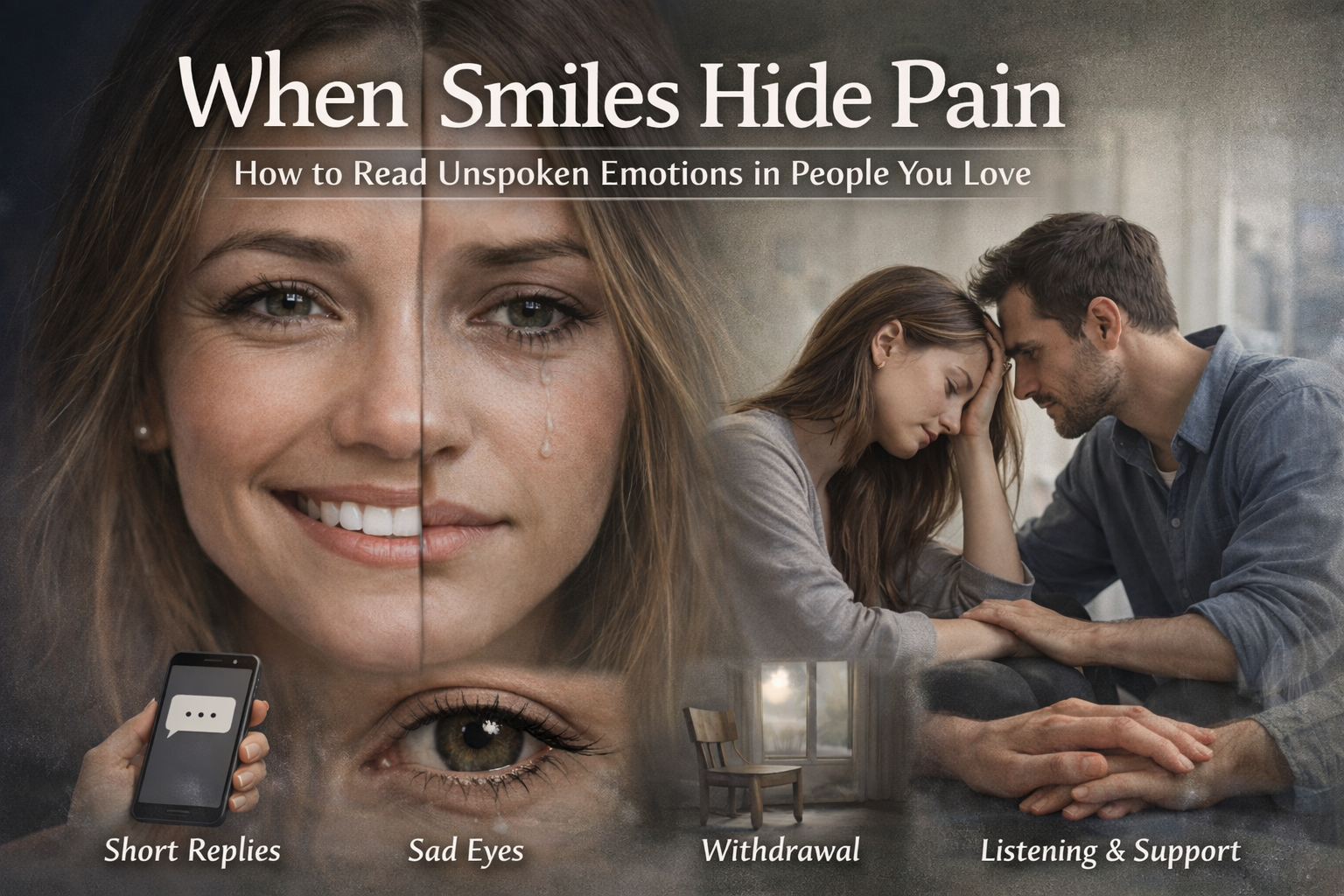
Not everyone says what they feel. Not everyone asks for help. Some emotions don’t come out in words — they show up in tired eyes, shorter replies, delayed messages, or sudden silence.
We often miss these signs because we’re waiting for someone to say, “I’m not okay.” But many never will.
Understanding unspoken emotions is not about overanalyzing people. It’s about learning how to recognize hidden pain, respond with emotional awareness, and build stronger relationships based on trust.
Why People Hide Their Emotions
Many people who struggle emotionally do not show obvious signs. There are common psychological and social reasons why someone may hide their pain.
1. Fear of Being a Burden
Some people grow up believing their problems are “too small” or that others have bigger issues. Over time, they learn to suppress emotions instead of expressing them.
For example, a working parent managing responsibilities at home and at work may feel overwhelmed. But when asked how they are doing, they reply, “I’m fine,” because they don’t want to add pressure to anyone else.
Hidden emotional pain often starts with the belief that vulnerability is inconvenient.
2. Lack of Emotional Language
In many households, emotions were never discussed openly. Crying was discouraged. Anger was punished. Sadness was ignored.
As adults, these individuals may feel deeply but struggle to identify or communicate what they are experiencing. This is sometimes linked to emotional suppression or difficulty with emotional awareness.
They are not avoiding honesty. They may simply not have the tools.
3. Past Experiences of Being Dismissed
If someone has opened up before and was told they were “overthinking” or “too sensitive,” they may stop trying.
Emotional withdrawal is often a learned response.
Signs of Hidden Pain Behind a Smile
Not every cheerful person is struggling. However, certain behavioral changes can indicate emotional distress.
1. Noticeable Changes in Energy or Behavior
They still attend events. They still complete tasks. But something feels different.
Maybe they laugh less freely. Maybe they respond with shorter messages. Maybe they seem physically present but mentally distant.
Sudden or gradual shifts in emotional energy can be subtle signs of hidden stress or internal conflict.
2. Consistent Deflection of Personal Questions
Some individuals are excellent listeners. They will ask about your life in detail.
But when you ask about theirs, they change the topic or keep answers brief.
Avoidance of self-disclosure can be a protective strategy.
3. Heightened Sensitivity to Small Triggers
Minor inconveniences may cause stronger reactions than usual. Or they may go unusually quiet after a simple comment.
This is often not about that specific moment. It may reflect accumulated emotional pressure that has not been processed.
Common Mistakes When Trying to Help
When we sense someone is struggling, we often try to solve the problem quickly. But certain responses can unintentionally increase emotional distance.
Avoid phrases such as:
-
“You seem fine to me.”
-
“Everyone deals with this.”
-
“Just think positive.”
-
“It’s not a big deal.”
These responses may be well‑intended, but they can feel dismissive. Emotional validation is essential for building trust.
How to Support Someone Who Hides Their Feelings
Supporting someone with unspoken emotions requires patience and consistency rather than intensity.
1. Create Emotional Safety
Instead of confronting them directly, approach gently.
For example:
“I might be wrong, but I’ve noticed you seem quieter lately. If something is on your mind, I’m here.”
This reduces pressure and invites conversation without forcing it.
(External reference suggestion: Under this section, reference Dr. Brené Brown’s work on vulnerability and emotional safety in relationships.)
2. Practice Active Listening
If they begin to open up, focus on listening instead of fixing.
If someone says, “I feel like I’m not doing enough,” resist the urge to immediately reassure or correct them.
Instead, try:
“That sounds exhausting. What has been weighing on you?”
Active listening strengthens emotional connection and reduces feelings of isolation.
(External reference suggestion: Under this section, link to Mayo Clinic’s guidance on active listening and supportive communication.)
3. Be Consistent, Not Overwhelming
Trust develops over time. One conversation may not change everything.
Small, regular check‑ins communicate reliability.
Sometimes the most meaningful support is simply staying present.
If You Are Hiding Your Own Pain
Many people recognize themselves in this pattern.
If you often smile while struggling internally, consider reflecting on these questions:
-
When did I learn to suppress my emotions?
-
What am I afraid might happen if I express vulnerability?
-
Is there one safe person I could speak honestly with?
You do not need to share everything at once. Emotional openness can begin with one honest sentence.
If feelings become overwhelming or persistent, speaking to a licensed mental health professional can provide structured support.
Conclusion
Not all pain is visible. Not all distress is verbal.
Learning how to recognize hidden emotions and respond with empathy improves both personal relationships and emotional wellbeing.
The goal is not to analyze or diagnose others. It is to build awareness, practice emotional validation, and create space where honesty feels safe.
Sometimes understanding begins not with advice, but with quiet attention.